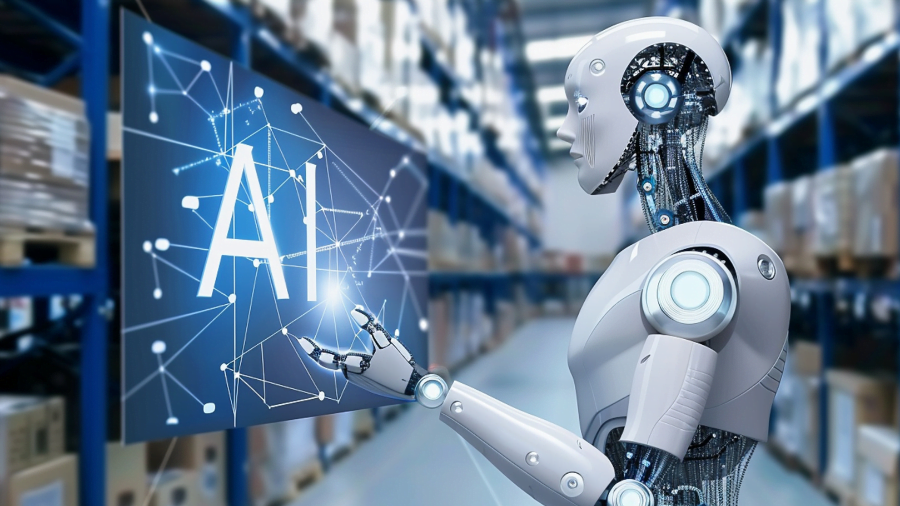

In 2026, artificial intelligence is no longer an emerging trend—it is an essential layer of everyday life.
From how people shop, work, communicate, and make decisions, AI has become deeply embedded into digital
and physical environments. Businesses, consumers, and institutions now rely on AI-powered systems for
speed, accuracy, personalization, and scalability. What once felt experimental is now operational,
commercial, and mission-critical.
AI in 2026 is defined by real-world usefulness. Voice assistants understand intent rather than commands. Recommendation engines predict needs before users search. Automation tools reduce human workload without removing human control. For businesses sourcing AI-driven products, platforms, or solutions, this shift represents not just innovation—but competitive necessity.
At TGR Go, we curate forward-facing technology collections designed for modern commerce, enterprise adoption, and fast-moving digital ecosystems. This collection explores how AI is reshaping daily life in 2026 and why buyers, resellers, and technology partners are aligning with AI-enabled solutions at scale.
AI in Daily Consumer Experiences
Artificial intelligence now personalizes daily experiences across devices, platforms, and services. Smart homes adjust lighting, temperature, and energy use automatically. AI-driven shopping platforms recommend products based on real behavior, not assumptions. Content platforms adapt feeds in real time based on attention patterns and context.
Workplace Automation and Human-AI Collaboration
In 2026, AI does not replace human work—it enhances it. Routine tasks such as scheduling, reporting, customer support triage, and data analysis are handled by AI systems, allowing teams to focus on strategy, creativity, and decision-making. Businesses adopting AI-driven workflows see faster turnaround times, lower operational friction, and improved consistency.
AI in Commerce, Retail, and Logistics
AI-powered demand forecasting, inventory planning, and fulfillment optimization are now standard in modern commerce. Retailers use AI to predict buying cycles, reduce waste, and streamline delivery. For wholesale buyers and distributors, AI ensures accuracy, speed, and scalability across supply chains.
Security, Privacy, and Responsible AI Use
As AI adoption grows, so does the focus on ethical deployment. In 2026, responsible AI means transparent data usage, human oversight, and compliance with evolving global standards. Buyers increasingly prefer solutions that balance automation with accountability.
Why AI-Driven Solutions Matter for Buyers in 2026
Whether sourcing AI-powered software, tools, or integrated systems, buyers are prioritizing reliability, adaptability, and real-world performance. AI is no longer about experimentation—it is about measurable outcomes, long-term scalability, and seamless integration.
Explore future-ready AI-driven solutions with TGR Go.
Built for modern commerce, enterprise growth, and fast deployment.
Disclaimer: This content is for informational and commercial evaluation purposes only. Artificial intelligence technologies vary by implementation, compliance requirements, and intended use. Buyers should conduct appropriate due diligence before deployment.
Frequent ask questions, FAQ’s
Where can businesses source AI-driven solutions in 2026?
Businesses source AI-driven solutions through curated technology platforms, enterprise vendors, and specialized marketplaces like TGR Go that focus on scalability, compliance, and fast deployment.
Is AI suitable for small and mid-sized businesses?
Yes. In 2026, AI tools are modular and scalable, making them accessible to small and mid-sized businesses without requiring large infrastructure investments.
Can AI improve operational efficiency without replacing staff?
AI improves efficiency by automating repetitive tasks while supporting human decision-making, allowing teams to focus on higher-value work.
What industries benefit most from AI in 2026?
Retail, logistics, finance, customer service, manufacturing, and digital marketing are among the industries seeing the highest AI-driven productivity gains.
How do buyers evaluate trustworthy AI solutions?
Buyers evaluate AI solutions based on transparency, data governance, real-world performance, integration support, and vendor accountability.